Overcoming Resistance to Change in HubSpot Implementation
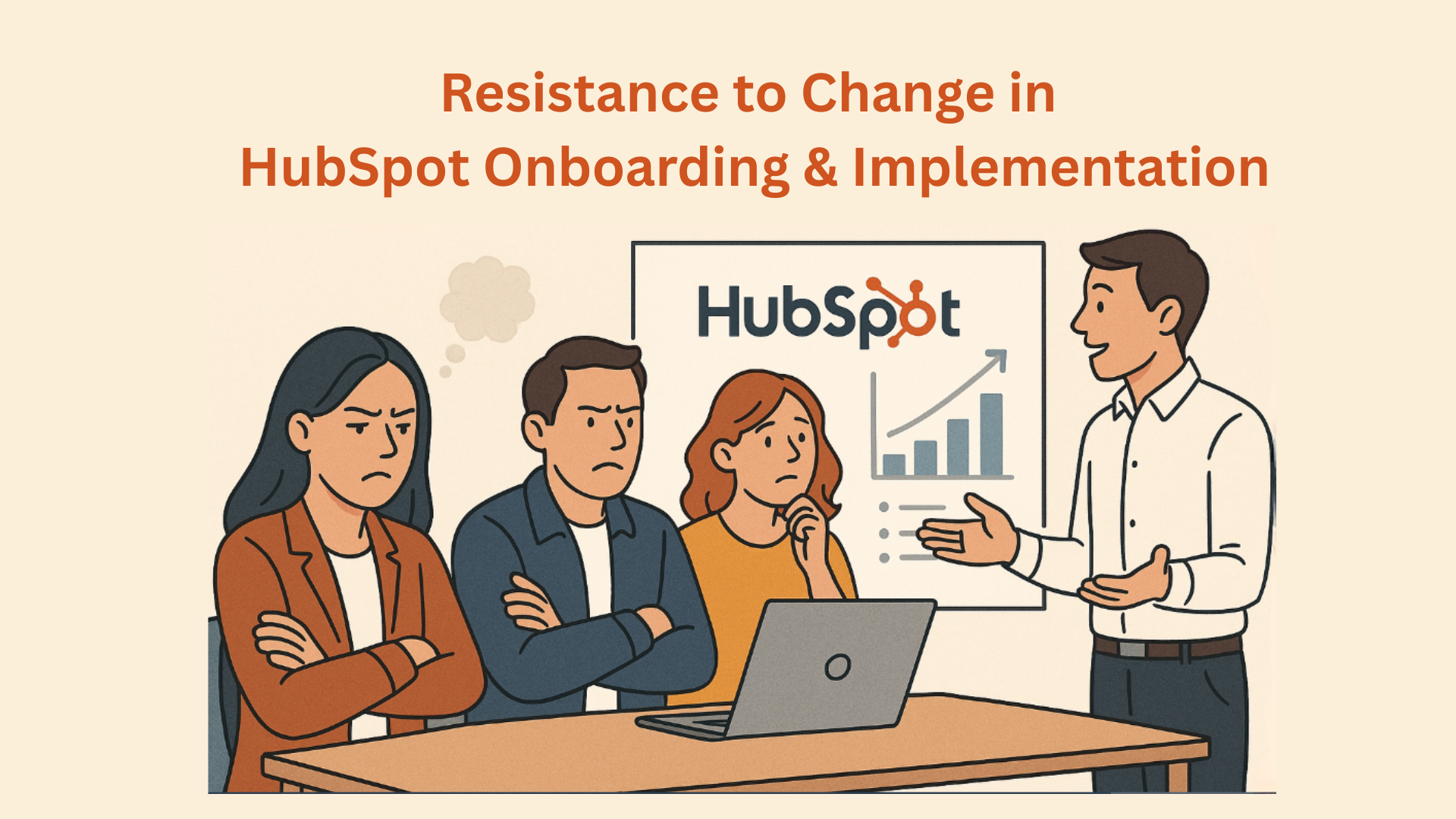
Implementing HubSpot as your integrated marketing, sales, or service platform can be transformative while it drives efficiency, visibility, and growth across your organization. Yet, even the most robust technology can falter if users resist change. Understanding the roots of this resistance and applying research-backed strategies is essential for a smooth onboarding journey and maximizing ROI from your HubSpot investment.
Does Resistance to Change Arise During HubSpot Onboarding?
Change is rarely just about technology—it’s about people, habits, and culture.
When organizations introduce HubSpot, employees often face a mix of excitement and apprehension. Here’s why resistance commonly surfaces:
Common Causes of Resistance
- Fear of the Unknown: Employees worry about disrupted workflows, unclear expectations, or losing their sense of competence.
- Job Security Concerns: Automation and new processes can trigger anxiety about redundancy or shifting roles.
- Comfort Zone Bias: Long-time users of legacy systems may be reluctant to embrace new tools, especially if they’ve “made it work” for years.
- Insufficient Training: Without effective onboarding, contextual help, or ongoing support, users feel unprepared and frustrated.
- Perceived Complexity: If HubSpot’s interface or features seem overwhelming, adoption rates suffer.
- Unclear Processes: Ambiguity around responsibilities, goals, or workflows creates confusion and resistance.
- Technical Setbacks: Access issues, missing integrations, or migration hiccups can make the transition feel daunting.
- Integration Difficulties: Ensuring HubSpot connects seamlessly with existing marketing, sales, and service tools is often a major hurdle.
Real-World Pain Points in HubSpot Onboarding
Resistance isn’t just theoretical—it shows up in day-to-day onboarding challenges, such as:
- Repetition & Communication Gaps: Sales and onboarding teams may ask for the same information multiple times if data isn’t shared seamlessly, frustrating users.
- Technical Bottlenecks: Issues with credentials, DNS settings, or API connections can delay adoption and erode confidence.
- Content Shortfalls: Missing templates, emails, or collateral slow down pipeline or campaign setup.
- Time Commitment Underestimated: Teams often underestimate the time and input needed for effective onboarding, leading to disengagement.
- Weak Internal Processes: Disorganized workflows make it difficult to set up automations, reporting, and handover resources.
- Change Fatigue: Employees who’ve experienced frequent tech upgrades or digital transformations may be especially resistant to “one more change.”
The Psychology of Change: A Framework
Drawing on proven change management models (such as Scott and Japhy’s Model of Change), successful HubSpot onboarding follows three key stages:
- Unfreezing: Communicate the rationale for change, foster open dialogue, and address concerns directly.
- Transition: Provide hands-on, role-specific training and mentorship. Encourage questions, feedback, and incremental learning.
- Refreezing: Celebrate wins, recognize champions, and reinforce new routines with ongoing support and continuous learning.
Research-Backed Strategies for Overcoming Resistance
To move from resistance to advocacy, organizations should prioritize these evidence-based tactics:
1. Early Stakeholder Engagement
Identify champions within key departments and involve them early. Their buy-in helps drive momentum, anticipate objections, and smooth transitions.
2. Clear & Transparent Communication
Articulate both the “why” (business growth, ROI, better collaboration) and the “how” (roadmap, individual impact) of the change. Transparency builds trust.
3. Comprehensive Training & Support
Implement structured onboarding programs, contextual help resources, and digital adoption platforms tailored to different roles.
Offer live workshops, tutorials, and Q&A sessions to address fears and build user confidence.
4. Employee Involvement & Feedback Loops
Invite staff to influence the onboarding process. Encourage feedback, make iterative improvements, and celebrate success stories to foster ownership.
5. Process Mapping & Resource Preparation
Audit existing processes, content, and technical assets before onboarding begins. Ensure all integrations, credentials, and resources are ready for a seamless rollout.
6. Leadership by Example
Management should champion HubSpot adoption, model positive engagement, and publicly recognize team efforts.
7. Continuous Monitoring & Improvement
Track usage, identify friction points, and adjust onboarding materials as needed. In-app analytics and feedback tools are invaluable for ongoing optimization.
HubSpot-Specific Considerations
- Centralization:
Leverage HubSpot’s tailored onboarding plans that align with your business goals and existing tech stack. - Customization:
Configure HubSpot’s CRM, automations, and content modules to reflect real user needs and workflows—not just out-of-the-box defaults. - Scaling:
Use HubSpot’s data-driven dashboards to demonstrate ROI, track progress, and highlight improvements in marketing, sales, and service outcomes.
Conclusion
Resistance to change during HubSpot onboarding is both a human and operational challenge. The most successful organizations combine transparent communication, early stakeholder engagement, robust training, and adaptive leadership to overcome both psychological and technical hurdles. By addressing the root causes of resistance and managing the onboarding process strategically, businesses can turn skepticism into advocacy—unlocking the full value of HubSpot and setting the stage for continuous improvement and scalable growth.
Related Topics
About Ashish Patel
Ashish Patel is a contributor at HubsPlanet, sharing insights on HubSpot best practices, CRM strategies, and marketing automation to help businesses grow smarter.
Table of Contents
Stay Updated
Get the latest HubSpot tips and strategies delivered to your inbox.
Need Expert Guidance?
Get personalized recommendations from our certified HubSpot consultants.
Reading Progress
Estimated 3 minutes remaining